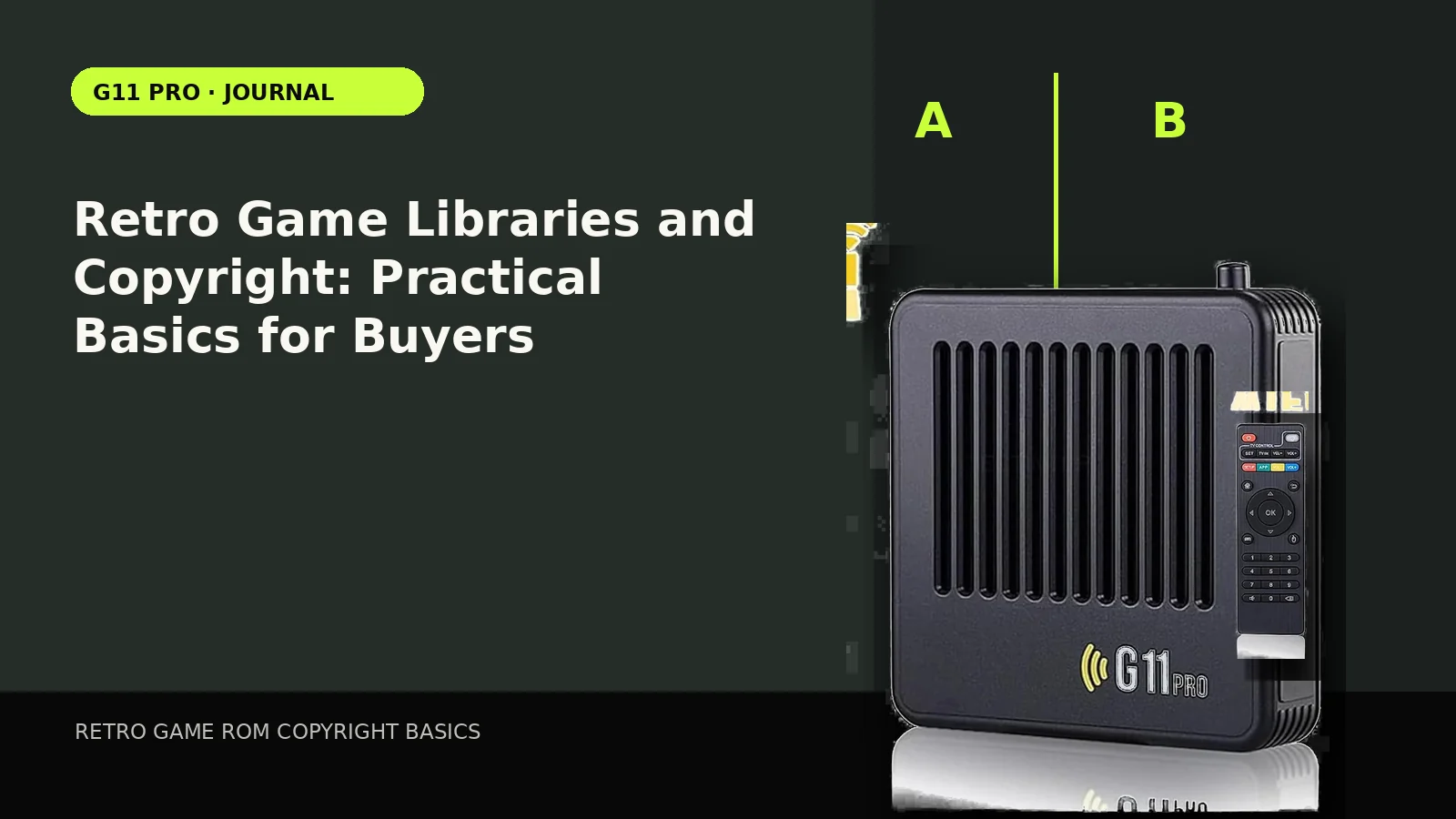
Retro hardware and emulation software can be legitimate tools, but copyrighted game files are a separate rights question. A large preloaded library is not automatically licensed simply because it arrives on a physical device.
Hardware, emulators and games are different layers
A console is hardware, an emulator is software that imitates another system, and a game image contains copyrighted game content. Each layer can have different licenses and legal conditions.
Owning an original copy does not automatically authorize distribution
Personal backup rules vary by jurisdiction, but a seller distributing copies to customers needs its own lawful basis. Your ownership of a cartridge does not by itself give a retailer permission to send you someone else’s copy.
Big game-count claims deserve questions
If a store advertises tens of thousands of commercial games, ask what exactly is included and under what rights. Public-domain, homebrew and legally licensed collections are different from unauthorized commercial ROM sets.
Advertising platforms can care about the rights chain
Marketplaces and advertising systems may restrict products that facilitate unauthorized distribution of copyrighted media. Hardware-focused product feeds are safer when the seller cannot document rights to bundled commercial content.
Buyers can still evaluate the hardware on its own merits
HDMI output, controllers, storage capacity, interface, support, returns and local multiplayer are legitimate hardware attributes. They should stand on their own without relying on an unverifiable list of famous game names.
Compare setup styles in our Retro Gaming Guides, or check the live G11 Pro product page for current storage, price and verified box contents.