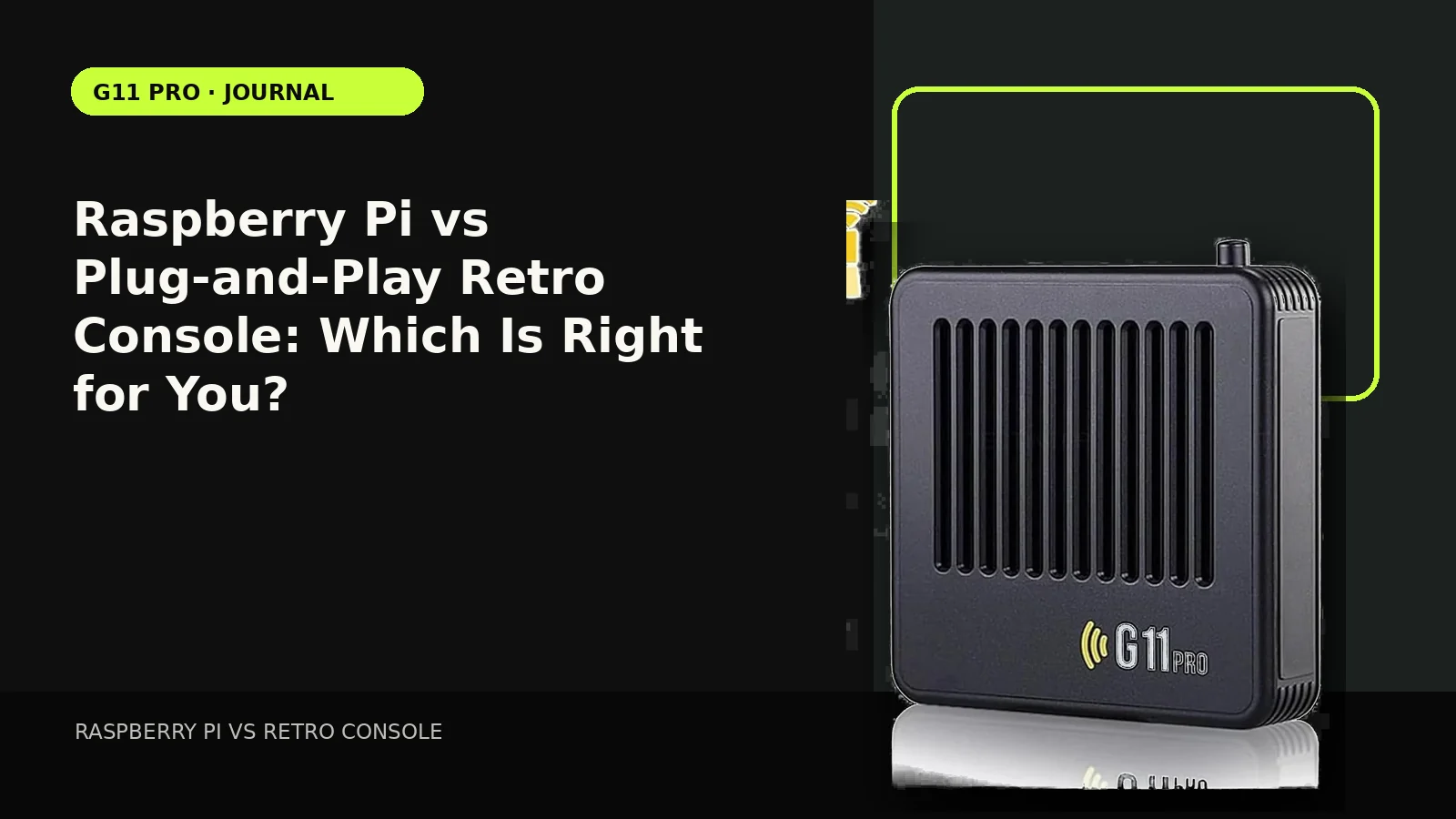
Both approaches can put retro games on a television, but they are built for different personalities. A Raspberry Pi is a flexible project platform; a plug-and-play box tries to turn the same general idea into an appliance.
Raspberry Pi rewards people who like building
A Pi setup gives you control over operating system images, storage, cases, cooling, controllers and emulator configuration. That is an advantage when customization is the hobby. It also means you are responsible for more of the setup and troubleshooting.
Plug-and-play reduces the decision tree
A preconfigured console arrives as a fixed hardware package with a defined interface and accessories. You trade some flexibility for a shorter setup path and one support target.
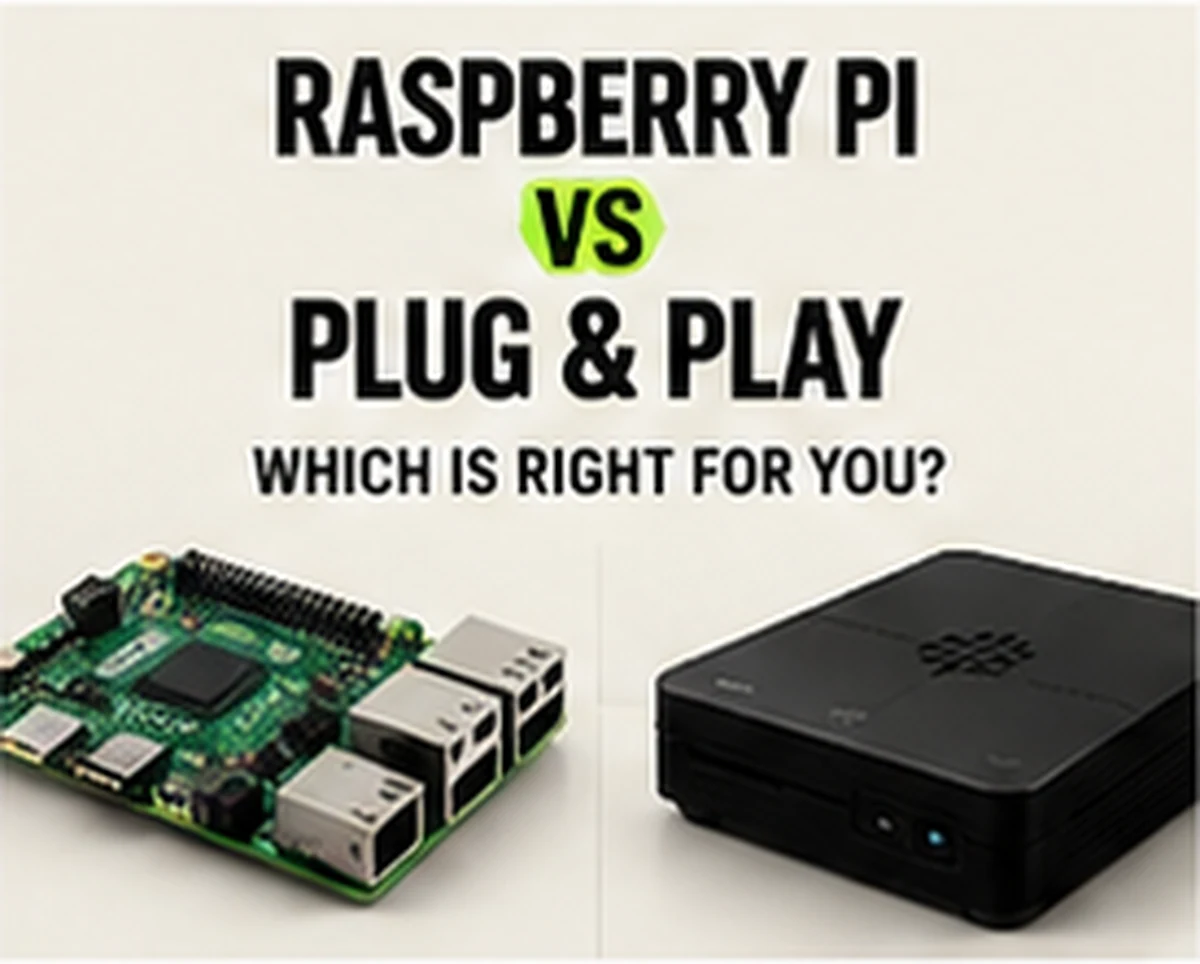
Total cost is more than the board or box
For a Pi, include storage, case, power supply, controller and your time. For a prebuilt console, check what ships in the box and whether replacement controllers or storage are easy to source.
Maintenance expectations differ
A DIY system may be easier to repair or reimage because you built it. A fixed appliance can be easier day to day but more dependent on vendor firmware and documentation.
Choose for the experience you enjoy
If you enjoy tutorials, configuration files and experimentation, the Pi route can be satisfying. If you mainly want to sit down and play on the TV, a simpler preconfigured box can be the better fit.
Compare setup styles in our Retro Gaming Guides, or check the live G11 Pro product page for current storage, price and verified box contents.